

I’ve written extensively about the fascinating and burgeoning field of microbiome research (see here, here, here, here, here, here, here, here, and here, just for starters). As previously discussed, our diets and medication usage profoundly affect the composition and diversity of the teeming microbial communities that inhabit our gastrointestinal tract, which in turn profoundly affects our physical and psychological health.
But the human-microbiome interaction doesn’t just impact on you. If you’re a woman who is pregnant, or planning to become a mother, you need to know that the diet that you eat before and during conception also has a profound and long-lasting impact on the gut microbiome of your baby.
To be specific, women who eat a high fat diet before and during pregnancy may be causing alterations in their developing babies’ microbiome that predispose their infants to diabetes and obesity, regardless of whether they themselves become overweight on this diet.
Until relatively recently, it was believed that babies were born sterile - in other words, that their first contact with bacteria was at birth. However, we now know that the placenta (the organ that develops in a woman’s uterus during pregnancy, ‘housing’ the baby throughout pregnancy and providing oxygen and nutrients to fuel its growth) has its own microbiome. And, since meconium - the newborn’s first bowel movement, which is composed of substances ingested while the baby was still in its mother’s uterus - contains microbes, it is clear that those microorganisms are transferred from the placenta, via the amniotic fluid in which the foetus floats, to the developing foetus.
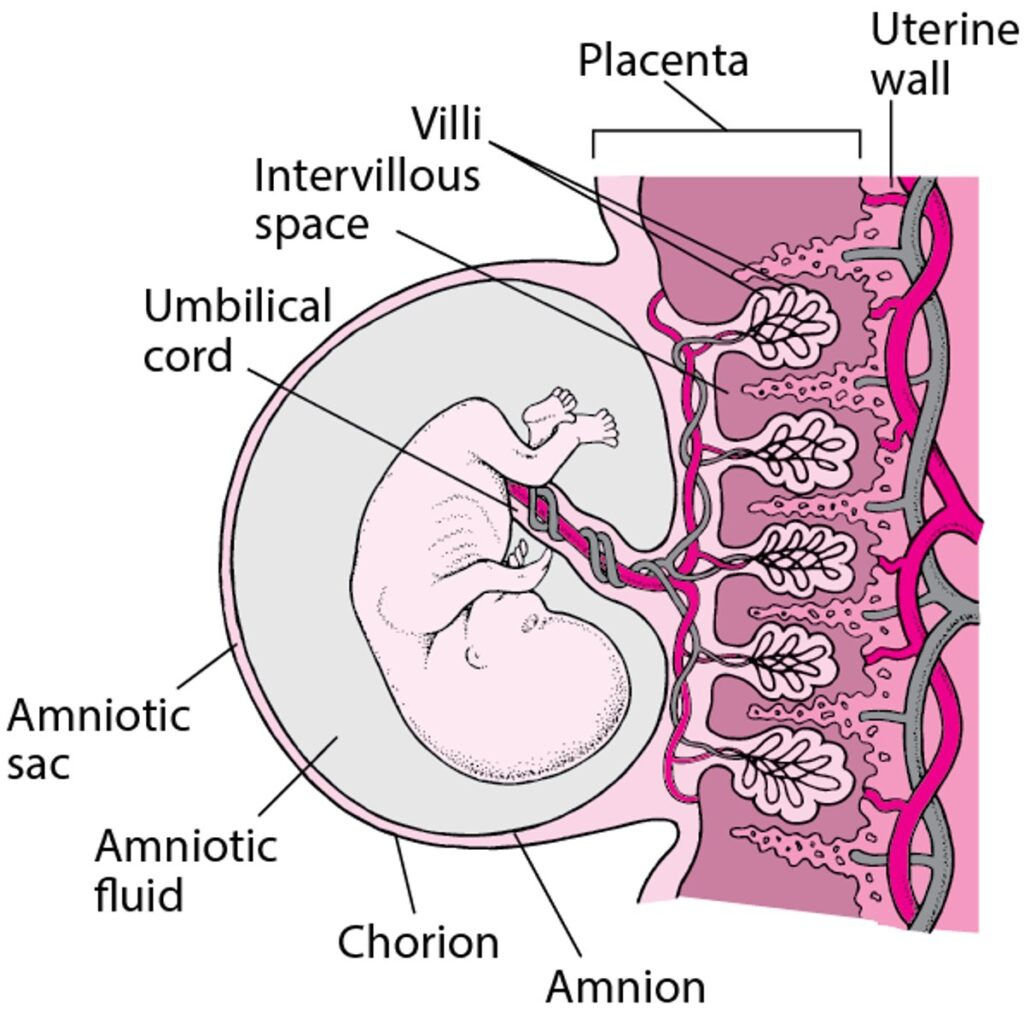
Researchers now believe that the placental and amniotic fluid microbiomes ‘seed’ the developing foetus with its first microbes, preparing it for the more intensive colonisation that occurs during birth and breastfeeding.
Although the placental microbiome is unique, it bears the greatest resemblance to the mother’s oral microbiome - the colonies of bacteria that inhabit the mouth and throat - and has somewhat less in common with the maternal gut microbial profile.
How do bacteria from the mouth and gut set up shop in the placenta? Oral bacteria can enter the bloodstream, especially if the gums are inflamed (as is common during pregnancy due to hormonal and vascular changes), and travel to the placenta to colonise it. The gut membrane is also ‘leakier’ during pregnancy, allowing what is called translocation of bacteria from the gut lumen (the ‘space’ inside the gut) into the bloodstream.
In addition, specialised white blood cells known as mononuclear cells have been found to transport gut bacteria to the mother’s mesenteric lymph nodes (the tissues that receive lymph drained from the small intestine and colon) and mammary gland in late pregnancy and during lactation in mice. There is strong evidence that the same process occurs in humans too. So bacteria may travel to the placenta under their own steam, or be intentionally delivered there by the mother’s immune system.
Incidentally, the discovery that oral microbiota can colonise the placenta may help to explain the long-observed association between periodontal disease in pregnant women and an increased risk of premature birth. Periodontal disease is essentially a dysbiotic condition, in which the oral microbiome becomes unbalanced and dominated by disease-causing organisms.
The placental microbiome and maternal and infant health
The placental microbiome changes throughout the stages of pregnancy. It becomes less diverse but more unique to each individual as pregnancy progresses, hinting that a pregnant woman’s diet, lifestyle and other environmental factors may shape the bacterial ecosystem within her placenta - with profound implications for her developing foetus.
For example, there are significant differences in the placental microbiome of women who develop gestational diabetes mellitus (GDM). GDM is a type of diabetes resulting from severe insulin resistance that begins during pregnancy and resolves as soon as the woman gives birth, but leaves both her and her baby at increased risk of developing type 2 diabetes later in life.
The placental microbiome of women with GDM harbours more Proteobacteria and Alistipes and fewer Firmicutes than non-GDM placentas. Proteobacteria are a bacterial phylum that includes many human pathogens, including Bordetella (the cause of whooping cough), Neisseria (gonorrhea and meningitis), Escherichia, Shigella and Salmonella (food poisoning), Yersinia (gastroenteritis, plague), and Helicobacter (gastritis, stomach ulcers). Alistipes is a ‘bilophilic’ or bile-loving genus in the Bacteroidetes phylum.
Both Proteobacteria and Alistipes are known to multiply rapidly in the gut microbiome of people who adopt a diet comprised entirely of animal products. People who eat a typical Western diet (high in fat and refined carbohydrates, and low in fibre) also have higher Proteobacteria and Alistipes abundance. On the other hand, Firmicutes metabolise the carbohydrates in plants that are indigestible to humans: fibre, resistant starch, and non-starch polysaccharides. Consequently, Firmicutes numbers drop on a low-carbohydrate, animal-based diet.
Another example: Women who are overweight when they become pregnant have more Bacteroides and Staphylococcus in their gut microbiota than normal-weight pregnant women. And higher Bacteroides concentrations were associated with excessive weight gain over the course of pregnancy - regardless of whether women begin or end their pregnancy obese. Bacteroides are bile-tolerant bacteria whose counts increase in people eating high-fat, high-protein animal food-based diets. The altered placental microbiome seen in women with excessive gestational weight gain is associated with an increased risk of premature birth.
How might maternal obesity and excessive gestational weight gain affect the placental microbiome? Whereas oral and gut microbes primarily metabolise carbohydrates and amino acids as their fuel source, placental bacteria specialise in metabolising fats. Researchers have proposed that
“The placental microbiota may aid in efficient extraction of energy from circulating fatty acids and play a crucial role in supplying energy-yielding substrates to the fetus.”
An increased efficiency at extracting energy from fat and delivering it to the foetus is highly adaptive for pregnant women faced with food shortage. Unfortunately, in the modern environment, dietary fat is all too easy to obtain.
Fat chance of having a healthy pregnancy
The link between high-fat diets and disease-promoting changes in the placental microbiome was first explored in animal studies.
When female mice were fed a high fat diet (45 per cent of calories from fat) from eight weeks before they became pregnant, and continuing throughout gestation, their gut microbiomes were significantly different from those of mice who were fed standard lab chow (17 per cent calories from fat) before and during pregnancy. Specifically, the animals’ gut microbiota overexpressed genes involved in the metabolism of fatty acids and ketone bodies, the breakdown of glucose (glycolysis), and the formation of glucose from fats and amino acids (gluconeogenesis). In other words, the gut microbiota of mice fed a high fat diet before and during pregnancy became significantly more efficient at harvesting energy from food.
Similarly worrying outcomes were observed in Japanese macaques, primates whose normal gut microbiota is more similar to that of humans than that of mice. Female macaques who were fed a high fat diet (36 per cent fat from animal fat, fish oil and corn oil) before and during pregnancy, developed a dysbiotic gut microbiome, which was ‘inherited’ by their offspring. Even when the baby macaques were switched to a low fat diet after weaning, the maternal high fat diet-induced dysbiosis was not fully corrected.
Animals who were fed the low fat diet (13 per cent fat from soy bean oil, but the same number of total calories as the high fat diet) all tended to remain lean throughout the experiment whereas roughly two thirds of the macaques fed the high fat diet became obese and insulin resistant, and the remaining one third stayed lean and insulin sensitive.
However, all macaques fed a high fat diet showed similar changes in their gut microbiome, regardless of whether they were obese or lean, and all high fat-fed macaque mothers ‘passed on’ their dysbiotic gut microbiome to their infants. The researchers concluded
“Our data demonstrat[e] a role for the maternal diet, rather than maternal obesity per se, in shaping the offspring gut microbiome at 1 year of age.”
So, a high-fat diet during pregnancy causes adverse and heritable gut microbiome changes in mice and monkeys... but what about men (or more to the point, women1)?
In a study of overweight women in early pregnancy, higher fibre intake was associated with greater gut microbiota richness and reduced levels of a low-grade inflammation marker, GlycA. Conversely, higher intakes of total fat, saturated fat, monounsaturated fat and omega-6 fat were all associated with decreased microbiota richness, with saturated fat exerting a particularly harmful effect. Women whose diet was both low in fibre and high in fat had increased representation of Bacteroidaceae family bacteria in their gut microbiota, and elevated levels of the inflammation marker GlycA.
Stool samples collected from newborn babies born to women who had eaten a high-fat diet during pregnancy (averaging 43 per cent of daily calories from fat) revealed a gut microbiome that was significantly different from babies of women whose fat intake was closer to population averages, and this altered gut microbiome was still apparent in stool samples collected six weeks after birth. As with the macaques, these distinct changes in infant gut microbiome occurred whether their mothers were obese or not.
And infants born to obese mothers had reduced microbial diversity and enrichment of fat-synthesising pathways in their gut microbiota metabolic profiles, peaking at three months of age and persisting until the final follow-up at six months of age. The gut microbiomes of obese children show increased metabolic activity, essentially extracting maximal calories out of the food eaten by their young hosts.
In summary, both the mother’s diet, and her body weight and composition, exert a profound and lasting influence on her children’s gut microbiota. Either having excessive body fat, or eating a high fat diet before and during pregnancy (regardless of whether or not it makes the mother herself fat) may set children up for a lifetime of struggling with their weight. On the other hand, diets rich in fibre and relatively low in fat - that is, wholefood diets high in unprocessed and minimally processed plant foods - make maternal weight management much easier, and also transmit a core microbiome that helps to protect children against metabolic dysfunction and obesity.
And if you want to ditch Substack and get my posts straight from the source - as well as commenting and viewing any content that Substack won’t let you see without using their privacy-invading facial recognition app - just
For information on my private practice, please visit Empower Total Health. I am a Certified Lifestyle Medicine Practitioner, with an ND, GDCouns, BHSc(Hons) and Fellowship of the Australasian Society of Lifestyle Medicine.
No, men cannot become pregnant. Ever.